A VIN check does not replace an inspection or a vehicle-history report, but it is free, takes minutes and catches the most common problems. Work through this list.
1. Match the VIN in three places
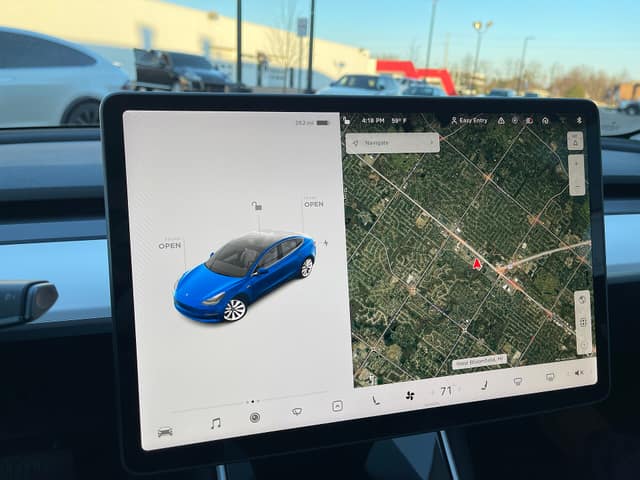
Compare the number on the windshield plate, the driver-door jamb sticker and the car’s own software (Controls → Software → Additional Vehicle Information), then with the registration papers and contract. Any difference is a reason to walk away until it is explained. See where to find a Tesla VIN.
2. Check the check digit
Paste the VIN into the TeslaVin decoder. An invalid check digit on a US or Canadian car points to a typo or a forged VIN. On Shanghai and Berlin builds it may be normal, so look at the other checks too. Background: check digit explained.
3. Confirm model, year and plant
Does the VIN say the same thing as the advert? Verify the model (position 4), the model year (position 10) and the plant (position 11). A "2021 Model 3 built in Fremont" whose VIN shows C for Shanghai is not what the seller claims – even if the car itself is fine, the description is wrong.
4. Verify the drivetrain and battery
Position 8 shows single or dual motor and Performance variants; position 7 shows lithium-ion (E) or LFP (F) batteries. Make sure that matches the advertised "AWD" or "Rear-Wheel Drive", and ask which battery chemistry the car has – it affects charging habits (LFP packs are usually charged to 100% regularly, NMC packs usually are not). See LFP vs NMC.
5. Look up recalls
TeslaVin lists NHTSA recall campaigns for the model and year, and links to NHTSA’s VIN lookup so you can see which are still open for this car. Many Tesla recalls are fixed over the air, but some need a service visit. More in how to check Tesla recalls by VIN.
6. Check the serial number for early builds
Very low serial numbers (the first 1,000 of a model) can be early production units; serial numbers that begin with a letter can mean special or internal vehicles. Neither is bad by itself, but ask about the history.
7. Run an official history report
Use your country’s official vehicle-history service (in Poland: Historia Pojazdu) or a commercial report to see ownership, accidents, mileage records and liens. The VIN is the key you need for all of them.
8. Inspect the car
A VIN cannot tell you about battery health, accident repairs or Autopilot hardware. Have an independent specialist inspect the car, and check the remaining warranty with Tesla using the VIN.